


On Being and Becoming a Writer
- Charlene Holkenbrink-Monk
- Apr 13
- 12 min read

I was in the 7th grade when I learned that I love writing. I've shared before, but my 7th-grade English teacher introduced me to the beauty of writing. I have collections of journals before that where I shared my hopes and dreams, the feelings I had for my first childhood love in middle school, the feelings of grief and discovery. And then, in 7th grade, my teacher introduced us to the beauty of poetry and prose.
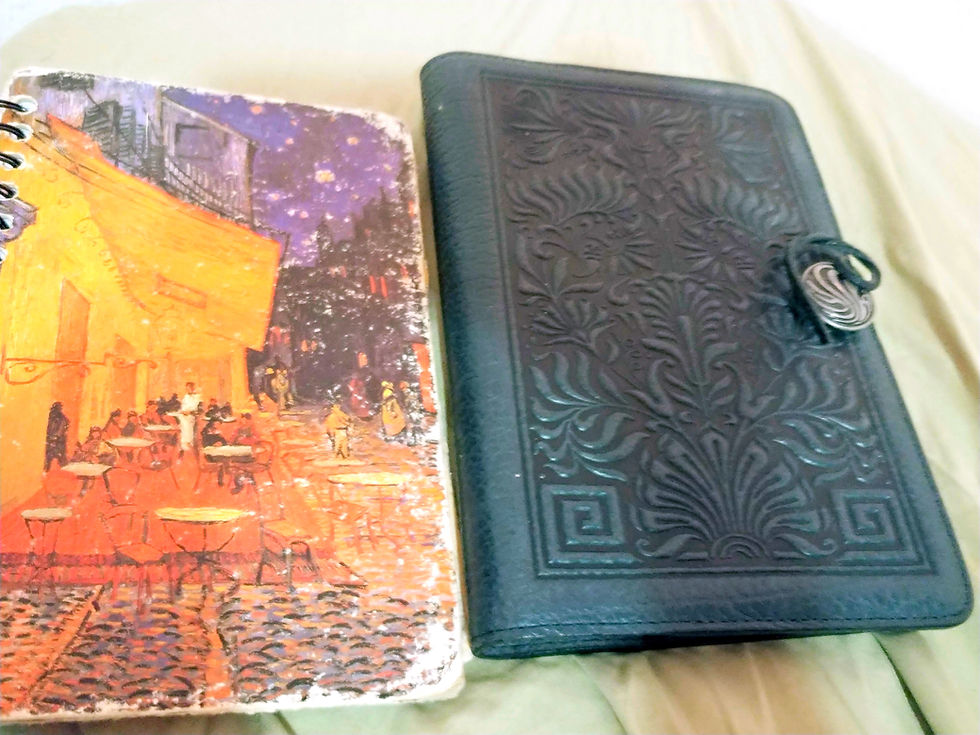
That's when I knew I wanted to be a writer.
Really, not just a writer, but an author.
And then life happened. I worked hard in high school, accomplished a GPA higher than a 4.0, got accepted to UCLA, went in as a pre-psych major, and then almost dropped out. I ended up on academic probation, eventually finding my way back to college after taking some time off, trying to figure out what I wanted to do. During that time, I went to massage school, wanted to work my way up while working at Starbucks, considered taking courses in music and creative writing at Santa Monica Community College or West LA, and perpetually felt lost.
When I took classes at the community college, I discovered a love of sociology, but I felt that the academy was too elitist and stuffy, which is why I ended up getting my PhD in education after my MA in sociology. The rationale behind this was that, to me, it felt as if a lot of PhDs (not just sociology) were disconnected from the world and their work. I also wanted to incorporate more sociological perspectives and lenses in education, rather than just complete a PhD in sociology with a focus on education. Despite my critqiue the the academia and that disconnection, here I am, still actively striving for tenure-track positions, beating myself up with each rejection, which, let's be real, comes in tsunamis.
I've been wallowing lately, of course. A job that I really wanted rejected me without a second interview, despite a decent teaching demo (teaching t-tests within 15 minutes, mind you) and solid answers to an interview. I just wasn't what they were looking for, story of my life. Despite over 250 job applications across four years, I've received a total of 4 interviews for tenure-track and postdoc positions. I've received two job offers for instructional roles, but they just didn't make sense to move and uproot my kids for the reduction in pay and the geographic location. But the job wasn't without concerns. The focus was on social statistics, and while I am good at teaching it, it isn't where my heart is.
So naturally, I scrolled through the photos I took in Spain, pausing at each one, and reread my past entries, stumbling across one that I wrote while in Spain, a time when I felt the most alive. I wrote the entry, What We Should Do, in March of 2025. I remember sitting in the salón of my piso en España, unable to sleep, watching the sunrise through the window. The orange and pink hues arose just above the wall enclosing our space, the green grass adorning the common space moist, and the footsteps of the few early risers were vibrating and echoing off the wall of our terraza, helping me appreciate the daily interactions I take for granted regularly. I heard birds chirping, and my sleep was terribly off. I had received another wave of rejections then, though I had also received multiple acceptances for book chapters, which I have since edited and submitted, and which are forthcoming.

Writing those instilled a sense of hope, a way that I can bridge my social science mind with my love for creative writing. But since returning, I've hit a wall. I'm struggling financially in ways I haven't for years, and that's because I had hoped for an opportunity to work only full-time rather than juggling multiple jobs to survive. Spain had shown me a way to exist as a human and not just an academic, and I wanted to maintain that, but I am finding I cannot do that as easily here in San Diego. I had not anticipated that humanizing myself the ways I did in Spain would result in occasional food bank visits, or creative recipes like using oatmeal to make homemade chicken nuggets for my kid. The preoccupation of what ot do what means that I have neglected my writing. The lyrical cadence that I value so much is not as appreciated in social science journals as it is in other creative works. Which also means that, in turn, social science positions do not value my work, either.
What is one to do? I'm not entirely positive, but it's definitely grounded me.
My fourteen-year-old son said, "Mom, you've spent so many hours writing cover letters and applying to these tenure-track jobs. Do you think maybe they're not meant for you? Like, just, that you really love writing stories and fiction, so maybe you should be spending your time focusing on that?" I didn't even have to pause. He was right. He knew how much I was throwing myself into my writing in Spain, the joy I had. He remembers the moments that he'd find me sitting at my dining table, music playing in my ears, the back door open while kids played in the common area. I would carry a notebook packed in my camera bag, along with a pen, items I traveled with everywhere, ready to capture a story, be it visual or otherwise.
I feel like I've failed those hopes and dreams. I find myself lying in bed, doomscrolling, or unable to function. I have a great idea, but then it is fleeting, or it sits in my mind, rarely flowing from my thoughts through my fingers and onto a page. The depression is heavy, never mind chronic health issues that are unidentified, unnamed, and often dismissed. Alas, not the point. Instead, I am frozen by the depression that I have faced since being back from Spain. My lack of community has slowed me down. The reality that many of the people I thought I had before I left for Spain are rarely to no longer speaking with me after I have returned, not for lack of respect, but rather because of the reality that we did not have as much in common as we expected. And I am frozen by the reality that perhaps my credentials are not as strong or ideal for the nature of academia.
I have rarely to never fit into a neat box. And the reality of higher education is that if one wants to make it, we have to have a specialty. But how do I define or explain to people that my "specialty" is to uncover stories and share experiences that are often silenced? To utilize various methods to share the histories that have been hidden, ignored, rejected, or intentionally stigmatized? That doesn't fare well when applying for a sociology position. How do I tell education spaces that I am writing about community, voices, experiences, and insight that maybe aren't focused on, say, teacher education and social studies, or higher education? The reality is that none of my work fits into any of those categories.
My value, then, is nonexistent in the world of higher education. Life is precarious as a lecturer. I value my colleagues who are also lecturers, but higher education does not believe in our value. We are paid less than our tenure-track colleagues, even when teaching five classes. We aren't guaranteed full-time classes without the appropriate seniority. We teach some of the highest-populated classes, yet we are devalued, not eligible for certain awards, not considered for our research or mentorship, and never guaranteed security. Our livelihood is precarious.
Do I want a tenure-track position? Yes. I would love that security, I love teaching my students, and research is important. I love contributing to scientific knowledge and academic conversations. Yet, my lyrical prose, poetic cadence, and fantastical thoughts are not aligned with the traditional academy.
And maybe higher education in general isn't it for me. I'm pretty good at teaching, and I foster a lot of relationships, but with each rejection, each academic year, I am reminded that I am not "good enough" in the academy, and I am pulled elsewhere. For every few academic job rejections, I am reminded of how much community I felt when I taught high school, something I circle back to time and time again. I ran into a former high school student of mine a couple of weeks ago, and it was such a wonderful reminder of the relationships we foster and the bonds we create. I left during a time when I needed to, for family obligations, my PhD, and contentious work dynamics at the time. Perhaps I needed that break, and that's another consideration. Because teaching doesn't have to be just higher education, either. It's just how I stumbled into it, more on this another day, and I tend to feel stuck by conditions that keep me afloat, but maybe it's time to do more than stay afloat. All of the writing I have been doing to apply to these jobs and publish in journals could be dedicated to writing fiction and creative nonfiction, rather than in an industry that doesn't value me, and especially in a system that frequently values publications over students.

My son summed up what I need to remember and hold close, which is that I need to spend the time I have been investing in over 200 applications into my writing. I felt the best when I was writing. I was proud of the daily writing, whether it was five words or five pages of ideas. I had built a world of a capitalism-fighting raven, love and connections through travel, and short stories I had submitted to literary magazines. And then, thrown back into my daily habits, I instead focused on how to achieve the dream of tenure-track. But is it my dream?
To say it out loud, for lack of a better phrase, to share in this space: I want to be a writer. An author. I want to write books and stories that make people's hearts go pitter-patter, skipping a beat when imagining the love they can find. I hope to create stories of beautiful travel and culture, opening up opportunities and ideas that I only dreamt of as a child, that I lived later in life, instilling hope in ways I had as a kid. I want to imagine a world that doesn't exploit working-class people, where folks can find themselves in my characters. I want to engage in creative nonfiction, telling my stories and others', in ways that do not confine me to a singular box for the sake of "expertise." I want to become a published author so my words can be shared among people rather than a narrow group of other experts who will read or approve. I want approval by the people, to tell the stories of groups who have been dismissed, stigmatized, or ignored. This is not to undervalue the importance of higher education. I love being in the space I am for now, and I appreciate the flexibility and intellectual stimulation. I enjoy seeing my students and encouraging them to pursue their dreams. But perhaps there is more to my identity than my professor identity (though I have a tattoo dedicated to teaching, so teaching probably is still in the cards for me.)
On that note, maybe part of my teaching is to teach students that our dedication is more than our titles. Yes, I deserve to be valued more. Yes, it is defeating to be disregarded and dismissed through every job application, reminded with each email that says, "We regret to inform you that we will not be moving forward with your application." But it seems that the time I am dedicating to the endless job search should instead be tailored to positions a little more aligned with the interdisciplinary nature of my work, and more so, the literary worlds I hope to build and share.
For so long, I have been dedicating my energy to what I "should" do, which is the tenure-track route after a PhD. I have been focusing so much on what the academy expects of me, which is to find a tenure-track position at a university, or after my nine years of teaching, to find a tenure-track community college position like the one I was recently rejected from, and to pump out endless publications that will be read by other experts in the field, but rarely impact people outside of the academy. I have been fixated on the "what I should do" to be valued as successful, further highlighted by the realities that I have been dismissed, disregarded, and ignored by colleagues and mentors who are in similar fields, rarely to never invited to panels where I hold similar experience, perhaps compounding further the fact that maybe, just maybe, I am not the academic the academy values.
I should not be disheartened by that. It hurts, yes, and it is a reality that I have to face and have faced for much of my life, further supported by a missing community that I had temporarily found in Spain. But I have never been one to fall into a particular box and fulfill expectations. I was the 8th-grade kid who was told there was no way possible I could implement every suggestion my teacher had for me, and instead showed up with a story that had been 23 pages and was now 58. I am stubborn, difficult, and a little hard to love at times. I am a hopeless romantic, though, quietly, secretly so, idealistic to the level that I think we can pursue something lovely and beautiful in the world on a collective and human level, and I am a writer who wants to share this with the world.
My stories and ideas do not fit into a typical social science box, which may hinder me... in this industry. Perhaps I studied the wrong field or pursued the wrong industry, but that does not mean that I cannot still do the things that feed my soul. It also means I do not need to do what I "should" do, the expectations of the academy, but instead what I need to do, what my heart needs to feel, to beat with love. The reality is that I need to teach to feed my belly, to take care of my children, to maintain a home. I will continue mentoring and showing my students love, modeling leisure and research, rigor, and learning. I love providing opportunities to think critically, to be equipped in a world that is anti-science. But I also need to continue rejecting my "shoulds" and keep writing my needs.
I will stop beating myself up over the days I lie in bed too long, and be thankful for one of my best friends who messages me every day, reminding me to write, his texts filled with love and harassment only a best friend can bestow upon a person, nudges for me to pursue what I love. I will begin trying to take my camera out and carry a notebook with me again. I will open my laptop, or attempt to, even when I am struggling to roll out of bed. I will try to connect with my community, writers in San Diego, and the people I love. I will still publish in journals when it aligns with my hopes and goals, and will absolutely submit to literary journals and magazines, aiming to share fantastical ideas and insight, to share examples of healthy love through fictional characters, to share the ravens who want to bring down exploitation, and creative nonfiction moments of my health struggles or lying in a hospital bed, medical dismissal and self-advocacy, in a way that can be shared for and by people living life, needing connection through words, and who will hopefully read what I write for the purpose of beauty and life, and not for the citations in their latest publication in a culture of hustle, grind, and publish or perish. Tomorrow will be a new day, so I will attempt to sit at a coffee shop and pour my heart out.

And I will stop beating myself up for every rejection. My credentials do not define me, and as I have noted before, Bad Wolf in Doctor Who says, "I am the Bad Wolf. I create myself. I take the words. I scatter them ... in time, and space. A message to lead myself here." So perhaps Spain was an important reminder to lead me here, through time and space. Maybe now is the time for me to pick up the words I have scattered through time and space, across the globe, and begin piecing them together, writing them onto a page, no longer stunted by what I "should" be doing, but instead doing what my soul needs me to do.
Instead, I write. And write more. I create worlds and experiences. I create myself. No longer scattering them, but instead sharing them, breathing life into my characters, and creating the words that create worlds to instill hope for others, but just as importantly, for myself. Because what I "should" do hasn't been working, and rarely has, so now it's time to shift gears, to reclaim what I had realized last year, and put it into practice. It's time for me to stop making 13-year-old Charlene wait in the library, hoping that her future self will publish the damn piece she's been imagining since the first day she was praised for her work, and instead, do the damn thing.
Because 13-year-old Charlene deserves more than what we "should" be doing, and instead deserves to pursue her dream. 13-year-old Charlene deserves to become the writer I am today, and deserves for me to become the writer I want to be. So, what better time than 38-year-old me?


Comments