


A Letter to the Woman I Was Last Year
- Charlene Holkenbrink-Monk
- Dec 5, 2025
- 11 min read

Updated: Dec 10, 2025
Dear Charlene, in December 2024,
You are about a month out from the trip of a lifetime. In a little over a month, you will land in Spain after 25 hours of traveling from San Diego to Chicago, Chicago to Madrid, and then finally, Madrid to Málaga. Coincidentally, today, the day I am writing this to you, marks six months since we moved out of our flat in Spain. Alas, you will learn that later.

Right around this time, the nerves will have kicked in. You are counting down the days in the semester, and you will have to go to LA soon to get your visas. You tell people you are excited, and you are. Underneath that excitement, there is also a knot of fear, because you know this is not just a trip. It is picking up your life, your kids, your work, and putting it somewhere entirely new, even if for five or six months. You do not know it yet, but the December 31 date you have planned to leave and travel to Spain, in hopes of starting the new year there, will not pan out. And neither will the January 6 date.
And honestly, that is okay. Because the stress will make you so sick that you will end up in the emergency room just before you leave, reminding you that you tend to sabotage, unintentionally, of course, things that you have worked hard for, pushing yourself to the point that your body refuses to keep going. It will be a sharp reminder that you cannot keep doing that to yourself, and push you not to sabotage this, too.
People have so many words for you right now, between advice and suggestions, rooting for you, or offering blunt reminders to just get it done and appreciate the privilege of having this opportunity. They remind you to soak up every moment, to say yes to everything, to be brave, trying to prepare you to begin a journey you can only imagine. What they do not tell you about is what happens afterward, how returning “home” can feel like grief, the empty feeling that lingers as if something is missing, something that once ran through you and held you together, something that was tangible at one time, coursing through your fingertips down to your toes, an air of peace mixed with joy and excitement and adventure that you can no longer quite touch. You do not know that yet. You only know that you are leaving. When you finally arrive, after the delays and the illness and the rescheduled flights, your body will start to exhale. It will be hard at first, but you'll settle.
You will get the keys to a flat several weeks later, which feels almost serendipitously, perhaps even synchronistically, just right for you and the kids. Your landlord will help carry your luggage, and he and his sister will keep repeating that they want you to feel comfortable, that they want this place to feel like home while you are so far from your own. They will bring groceries and show up with towels, blankets, and pillows, so you are not scrambling to find everything at once.

The flat itself will be simple and exactly what you need. There will be a large patio overlooking the property and the pool, a space where you can drink coffee, watch the kids, or just sit with your thoughts. The neighborhood will feel gentle and familiar surprisingly quickly, with wonderful food, good stores and markets, and enough distance from the main tourist areas that you can have quiet while still being close enough to go in and enjoy the city whenever you want. You will find a restaurant just steps from your building, the kind of place that leans into American décor and sports references on the menu, which will make you laugh because the atmosphere, the pace, and the people will feel nothing like the United States, but it is still welcoming and fun. You will go there early on because you know there will be food that feels somewhat familiar to the kids, and you will keep going back because the staff will start to recognize you, will know your drink order, and will point out when they are out of your favorite items well before you order them.

You will stumble into a cat café and co-working space called Paws for a Moment, and from the first visit, you will know you have found one of your “places.” It will be the space where your kids paint mugs, where you sit with a drink and a laptop or a notebook, where you talk to the staff about the cats and about life, where you feel your nervous system relax. Over time, you will visit so often that you will know each cat by name, and they will recognize you when you walk in. When you go one last time before you leave, you will feel the weight of saying goodbye to beings you only knew for a handful of months and yet somehow feel attached to. They will all become part of the story you tell about Málaga.

You will explore Málaga itself in layers. You will take the kids to Carnaval and learn about the Entierro del Boquerón (the Burial of the Anchovy), watching musicians and dancers flood the streets, and you will laugh at the silly, joyful parts, like minions dancing to “Gasolina,” even as you are struck by how beautifully the city knows how to celebrate. You will visit the Museo Carmen Thyssen and stand in front of paintings that capture everyday life. It will be your favorite museum, by the way. You will take the kids to several flamenco performances, and something you’ll ask your visitors to attend, too, and you will listen as the bailaora shares her own history as Gitana and talks about persecution and resilience and love.

You will start your research and slowly realize that the work you are doing there is aligned with who you have been all along as someone who notices murals and street corners and how people occupy public space, someone who cares about stories written into walls and sidewalks as much as stories written onto paper. That old love of photography and storytelling will come back in a way that feels less like nostalgia. You will photograph murals and windows, cats and kids, parades and boats, and narrow streets, because there is beauty in these everyday spaces.
You will explore, and you will rest, both of which are unfamiliar in different ways. And rest, especially, will surprise you. You have been “go, go, go” for so long that you do not quite know how to trust a slower pace. In Málaga, you will start to sleep longer, and maybe not every night, but enough that it feels like something is shifting. You will find yourself able to sit in a café without rushing, to walk through the city without feeling guilty that you are not answering emails in that exact moment. You will still get plenty done. You will work on articles, write toward your fiction book, get chapters accepted, and keep up your responsibilities. But your work will exist inside days that have space for sunlight and wandering instead of swallowing everything whole.

You will watch your kids change, too. Coming out of San Diego, a place that has been full of struggle and reminders of pain and anger, but of course beauty and love, too, they will soften and open in ways that are difficult to fully articulate but obvious to you. They will cook for themselves, fight less, and explore more. They will feel safe enough to walk short distances on their own, to order their own food (as long as you’re there, just in case), to navigate spaces with the confidence you have mostly only seen after long stays in Illinois with your dad. They will fall in love with tejeringos (churros specific to Andalucía and specifically Málaga) and cafés, with specific streets and shops, with Spanish desserts like coulants (Spanish lava cakes). Really, your children thrived. They grew in ways that were not just physical. They fell in love with the country, with the language, with a way of living that showed them there is more than one way to build a life. They stood in places that once only existed in your own imagination, and especially not when you were their age.

You will fall in love. Not only with Spain, but with the version of yourself who exists there, the one who walks to the market, the one who picks up her camera, the one who laughs more easily, the one who feels, maybe for the first time in a long while, like she is not constantly fighting a place that never quite fits. This is why you will write, more than once, that you have never had a place feel like home as much as Málaga has, and you will mean it every single time.
And then, because this is what grants do and what semesters do and what visas do, you will have to leave.
You will spend your last days and weeks visiting the places that have held you. You will send your landlord a long message thanking him for letting you make this your home, for being so kind and patient and generous, for helping you feel safe and welcome when you were so far away from everything familiar. When he writes back, you will read his response in Spanish and English, and you will sob in a way that surprises even you, because you will realize you have been looking for this feeling for most of your life, and now that you have found it, you have to let it go. And then you will board a plane.

You will not go straight back to San Diego. You will go first to Switzerland and then Ireland, knowing these are merely trips, and eventually making your way back to Illinois. You will visit that small town you know, and for a while, the re-entry will feel gentler, wrapped in cornfields and gravel roads. You will enjoy being with your dad, slipping back into the familiar rhythms of his house, seeing your kids settle into a place that has always held a different kind of steadiness for you. After not driving for seven months, you will get behind the wheel and drive across the county, noticing the strange mix of muscle memory and newness in your hands on the steering wheel, the quiet of rural roads after months of city streets, ending back up in San Diego, finally. You will be happy to hug people you missed, to catch up in person instead of through a screen, to see the ocean you grew up near.
And then the depression will settle in.

You will slide into your old habits because that is what you know how to do. You will teach and answer emails and show up for meetings, and jump back into community efforts and creative projects. From the outside, it will look like you have returned and picked up where you left off. Inside, your body will start to feel heavier. You will find yourself struggling to get out of bed, not for a day or two, but over weeks and then months, doing only what you need to do. Even as December arrives again, the December where I am writing this to you, there will still be days when you cannot bring yourself to move, when the weight of getting up feels like too much. Your camera will be by your bed, where you set it when you came back from Illinois, and it will stay there, untouched.
You will open your email and see messages from Alsa or Renfe about deals on routes you have taken to Sevilla, Granada, or Córdoba, and you will feel it in your chest before you even finish reading. Facebook will suggest events in Málaga, beautiful Christmas lights, and local celebrations, and you will realize that the city is still moving, still glowing, still gathering people in plazas you know by heart, and you are not there. Your kids will talk about Spain in the most casual ways. They will mention walking to the café, or making simple meals in the flat, or how safe they felt, or how much they miss the cats or the biznagas or the coulants or the ease of hopping on a bus together. They will say they miss what felt like “home,” and you will know they are talking about a place that technically never belonged to you and yet somehow feels like it always has.
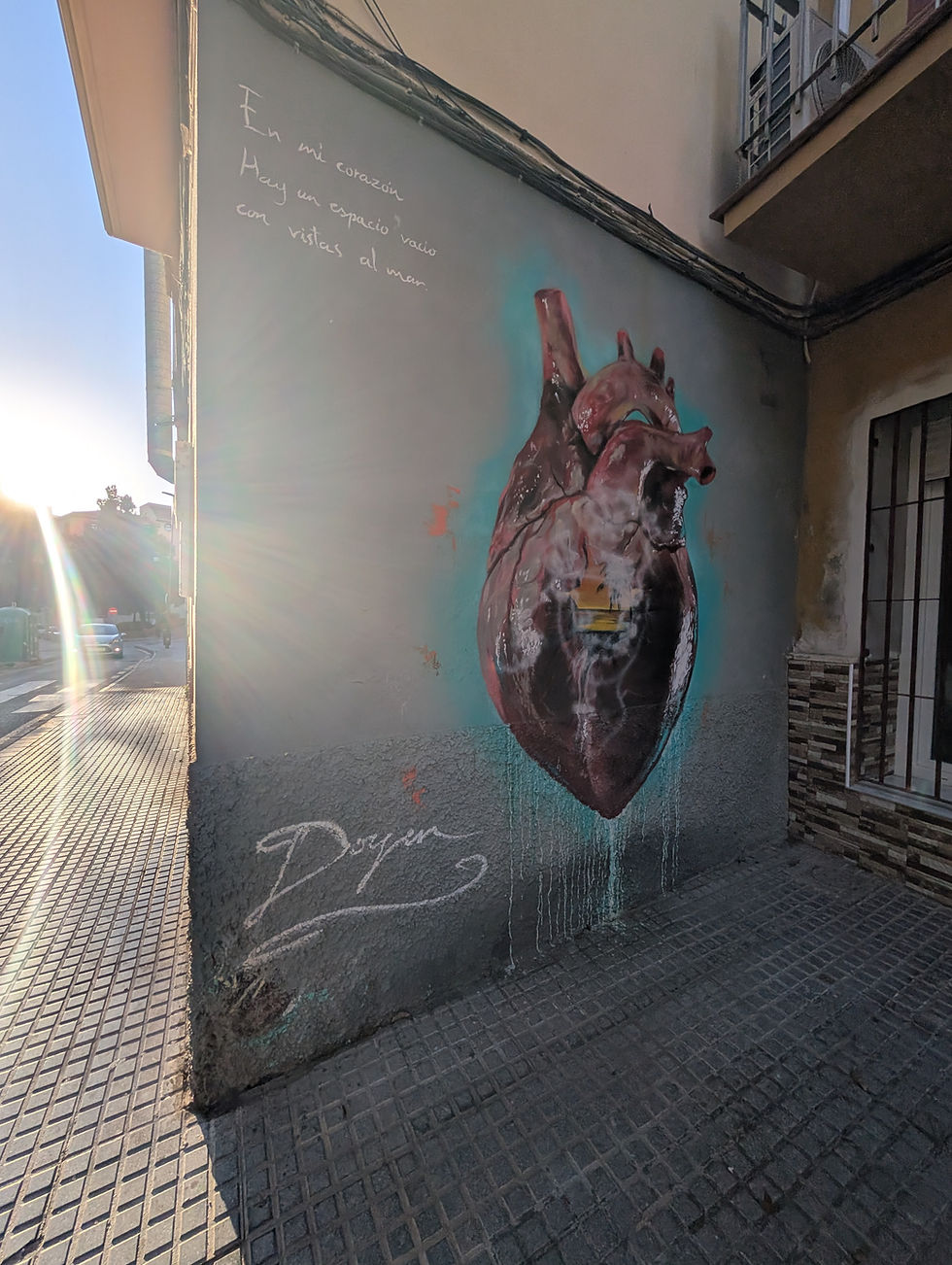
You will also begin to notice something more complicated in the relationships you come back to. It will not be that people are cruel or that they do not care; it will be that life has kept moving for them while you were gone, as it should, and many of the connections you imagined sliding back into will feel looser than you hoped. Friends and colleagues will be kind, busy, and also already full of their own lives. And this will be a reminder time and time again when you hit a wall, face tremendous heartache or stress, and you feel alone, with fewer replies, moments of contact, or answered calls. It will be a harsh reminder that the community you thought would feel solid around you does not always know how to hold the version of you who has come back carrying so much grief. Do not be angry at them. It is life. People are busy. Life looks different now, too. You can feel the pain, but you will be okay.
However, you will start to see, more clearly than before, how much you pour into other people and into institutions, how reflexively you show up, volunteer, respond, listen, organize, and how rarely you pause long enough to ask whether you feel held in return. Or even how you feel. You will not feel unloved, exactly, but you will feel out of sync, and the loneliness in that will be a soft, persistent ache that sits right alongside the longing for Málaga. Truly, no one prepared you for this part. Before you left, your advisors and the seminars taught you how to navigate culture shock, how to be a good guest in another country, how to represent your institution and your nation, and your research. They did not teach you how to live with the knowledge that you have experienced a version of home that you cannot easily return to.

This is not to scare you. It is to remind you that what you will feel later is not you being dramatic or ungrateful or broken; it is you trying to make sense of a life that has been split open and rearranged in ways you could not see from here. It is to help you remember what you experienced when the details start to blur, and to give you something to hold onto as you try to figure out what to do next. It is okay to have these feelings as multiple things can exist at the same time, that you have experienced an amazing opportunity and be grateful for it, while also struggling with this transition back.
When the sadness comes, and it will, I do not want you to use it to turn against yourself. I want you to let it show you what you need. Let it remind you of how fiercely you loved Málaga, how much you love your kids, how much you love the act of paying attention. Let it nudge you back toward your own work, your writing, your images, the stories you are capable of telling, even when you feel untethered. You cannot control who shows up for you in the ways you hope, but you can decide to keep showing up for yourself on the page and behind the camera, to keep writing your own story instead of waiting for someone else to hold it for you. You need to do this. Trust me, I’m still struggling to figure it out for both of us, but you need to.

But you will go. You will change. You will give your children a bigger world, and you will give yourself back pieces you thought you had lost. When you come back, the ground beneath you will feel different because it is. The woman you are right now cannot imagine all of this yet. The woman writing to you still does not know exactly what to do with everything she carries. But between the two of us, there is one thing that feels very clear.
You were never wrong for wanting a life that feels like home, for adventure, for one you had dreamed of for most of your youth. And even now, sitting here on the other side of it, you are still allowed to try to find your way back to that feeling, even if, for now, it lives in the stories you keep telling or the letters you write.
It was beautiful. Hold onto that.
Love,
Charlene, December 2025, the you who has already gone and come back, and is still learning how to live with all that you will find and miss in Spain


Inspiring & beautiful